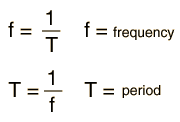
Periodic Motion
Periodic motion of some source object is necessary to produce a sustained musical sound (i.e., one with definite pitch and quality). For example, to produce a standard musical A (440 Hz), the source object must sustain periodic motion at 440 vibrations per second with a tolerance of less than 1 Hz -- the normal human ear can detect the difference between 440 Hz and 441 Hz. The conditions necessary for periodic motion are
- elasticity - the capacity to return precisely to the original
configuration after being distorted.
- a. a definite equilibrium configuration
- b. a restoring force to bring the system back to equilibrium
- A source of energy.
Fortunately, it is not hard to find vibrators which meet these conditions, hence the richness in variety of musical sound sources.
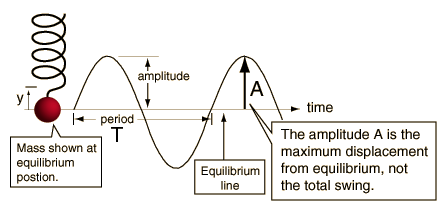
Terms for describing periodic motion.
A mass on a spring is an example of periodic motion with a single frequency called simple harmonic motion.
|
Index
Periodic motion concepts
Elasticity and musical sources |