Light Sources in Electronics
 |
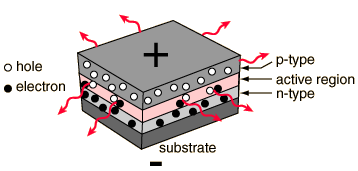
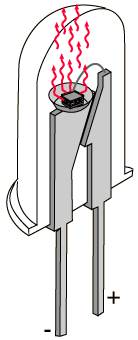
Light can be produced and/or controlled electronically in a number of ways. In light emitting diodes (LEDs), light is produced by a solid state process called electroluminescence. Under specific conditions, solid state light sources can produce coherent light, as in laser diodes. Other devices such as liquid crystal devices (LCDs) control externally supplied light to form display units. Liquid crystal projectors have made a major impact on public presentation of information, making inroads on the venerable cathode ray tubes. Other technologies such as the Texas Instruments' micromirror devices, called "digital light processors" as well as varieties of plasma displays are beginning to enter the market for displays. Craford, et al. make the case that LED lighting is making great strides in power and efficiency and will play a more major role in general lighting. Some types last 100,000 hours, compared to about 1000 hours for an incandescent bulb. Now that blue LEDs have become a reality, white light LEDs can be produced by combining the red, green and blue chips in a single device. |
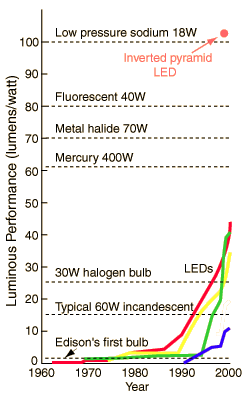
The efficiency of a device in converting electrical power to visible light is called "luminous performance" in the illustration, and is measured in lumens/watt. Low pressure sodium lights have very high efficiency because of the dominance of the sodium d-lines in the response of sodium vapor. As a tribute to the progress which has been made with LEDs, one type of red LED, the inverted pyramid type developed by Hewlett-Packard has exceeded the efficiency of "old yellow", the sodium light.
Electronics concepts
Optoelectronics concepts
| Electricity and magnetism |