Binary Counting

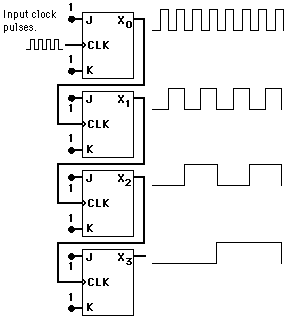
A binary counter can be constructed from J-K flip-flops by taking the output of one cell to the clock input of the next. The J and K inputs of each flip-flop are set to 1 to produce a toggle at each cycle of the clock input. For each two toggles of the first cell, a toggle is produced in the second cell, and so on down to the fourth cell. This produces a binary number equal to the number of cycles of the input clock signal. This device is sometimes called a "ripple through" counter. The same device is useful as a frequency divider.

Index

Electronics concepts

Digital Circuits

 
Electricity and magnetism 
Go Back


BCD or Decade Counter

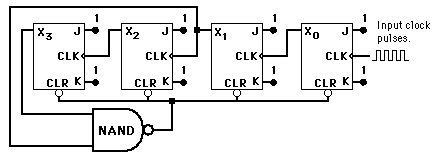
A BCD counter or decade counter can be constructed from a staight binary counter by terminating the "ripple-through" counting when the count reaches decimal 9 (binary 1001). Since the next toggle would set the two most significant bits, a NAND gate tied from those two outputs to the asynchronous clear line will start the count over after 9.

Index

Electronics concepts

Digital Circuits

 
Electricity and magnetism 
Go Back


Frequency Division

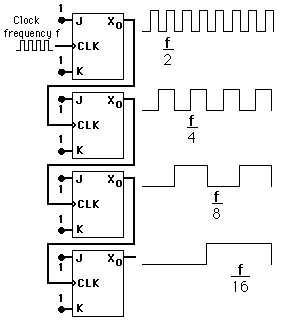
A frequency divider can be constructed from J-K flip-flops by taking the output of one cell to the clock input of the next. The J and K inputs of each flip-flop are set to 1 to produce a toggle at each cycle of the clock input. For each two toggles of the first cell, a toggle is produced in the second cell, so its output is at half the frequency of the first. The output of the fourth cell is 1/16 the clock frequency. The same device is useful as a binary counter.

Index

Electronics concepts

Digital Circuits

 
Electricity and magnetism 
Go Back


Counter and Decoder

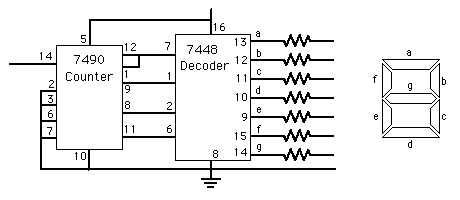
The 14-pin 7490 counter chip and the 16-pin decoder chip are often used together to drive 7-segment displays.

Index

Electronics concepts

Digital Circuits

 
Electricity and magnetism 
Go Back