Boomerang as Vector Rotation Example
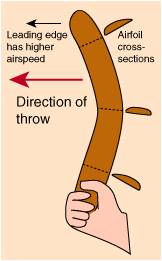
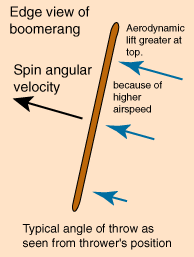
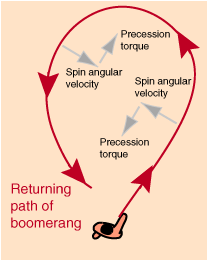
The returning trajectory of a boomerang involves the aerodynamic lift of its airfoil shape plus the gyroscopic precession associated with its rapid spin. The precession redirects the airfoil so that it "flys" around the returning path.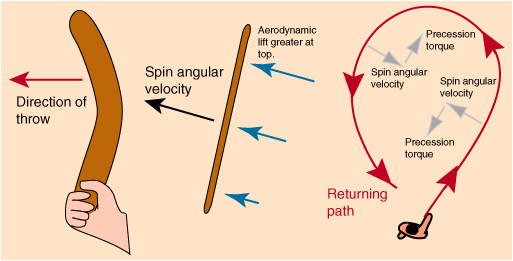
The three diagrams above address the nature of the boomerang's flight. Click on one of the diagrams for further details about the boomerang.
Vector rotation examples